Showing posts with label air quality. Show all posts

#I85BridgeCollapse: What I have seen so far

On Thursday night (March 30) just before 7pm, a segment of the I-85 bridge in Atlanta near Buckhead collapsed due to a fire. Below is a recap of what I have seen. It will take several months for the bridge to be rebuilt.

I left work late on Thursday, going home using MARTA as usual. MARTA trains were not affected by the event. I did not see the fire, but I was able to catch evacuations on camera from the train.

On Friday, March 31, I decide to buy a monthly pass, which I loaded on one of my blue Breeze Cards. I used a separate card from the silver card I normally use because I knew I would start using the pass a few days later. Friday was the last day to reload blue Breeze Cards as MARTA is phasing them out. (You cannot reload or check balance on Blue cards anymore, and blue cards will not be accepted as of July 9, 2017.)

I was able to catch on camera the emptiness of I-85 from the train on Friday morning. The sight was literally unreal, some friends referring to a 'Walking Dead' scene!

On Saturday, I traveled on Piedmont Rd near the I-85 bridge. Piedmont Rd was closed over the weekend for crews to clean the debris. Piedmont Rd is now partially reopen.

On Monday and Tuesday during the rush hour, MARTA and MARTA Army deployed volunteers to handle the influx of new passengers. MARTA reported as much as 25% increase in ridership from the loss of the bridge. Around 40 volunteers were stationed throughout MARTA stations!

On Monday afternoon, MARTA Arts Center Station was noticeably more crowded. I worked remotely on Monday to avoid storms.

What's next? Bridge reopening was announced for June 15. Meanwhile, commuters will have to do with delays, long detours, and low parking availability at MARTA stations and park-and-ride lots. Some hope that new transit users will find it worthwhile stick with it. What are your hopes?

IEEE PES Atlanta: Space Solar Power

This week at the IEEE PES Atlanta lunch event, the topic was on space solar power (SSP) . The presenter was Space Solar Power Institute President Derel Preble. Here are my notes from his presentation.


NASA started research on SSP in the 1980s. The principle is relatively simple: harvest photovoltaic (PV) energy from solar rays in the space before they get attenuated by the Earth's atmosphere, then transmit that energy to the ground using a low density microwave beam. Such beam would not be attenuated by the atmosphere. The energy from the beam would be collected using antennas rectifiers ("rectennas"). Each geo-orbit satellite could provide 1 GW of power. Northrop Grumman has committed $17 million for SSP research at Caltech to further advance the field.


There are big advantages to this concept, shown in the photo above:
  • Maximized PV energy collection,
  • Reduced transmission losses to the ground,
  • 24-hour availability without weather sensitivity,
  • Dispatchability (can modulate output anytime),
  • Reduced land use, with dual-use of land for farming.
The major drawbacks are the high financial and engineering risks:
  • Prohibitive cost to build/launch satellites (sweet spot at $150/lb with reusable rockets),
  • Challenges harvesting/capturing the energy transmitted from the satellites,
  • Maintenance of the equipment in space (by robots),
  • Effective, large scale storage (compressed air seems most cost effective).
Space solar power should be transmitted on a reserved microwave frequency, such as 5.8 GHz, to avoid interference with other equipment. Microwave ovens operate at 2.5 GHz. The Georgia Tech students in Prof. Durgin's lab presented their work on building a cost-effective rectenna to harvest 5.8 GHz microwaves using off-the-shelf products (e.g. a regular printer). They are able to use the energy from an emitter one meter away to power a diode!


Derel Preble noted important aspects of offsetting fossil fuels and carbon emissions:
  • There are no actions in place to mitigate rising CO2 levels (EPA hearing Atlanta Nov. 2015).
  • High CO2 levels decreases the nitrogen nutrients absorbed by plants, negatively affecting cattle quality in turn.
  • While high fuel prices tend to lead to recessions, the economy doesn't improve with low fuel prices after a recession as consumers struggle to recover.
  • Energy ROI (EROI) must be considered when designing renewable energy production and storage. "Buffered" EROI is half when including storage (energy buffers) because of the energy involved to build the storage technology. Derel Preble mentions that it is not worth the EROI trying to store PV and wind output.
In conclusion, I am excited to learn about space solar power because it is an opportunity to make the most of our Sun. What is still unknown is whether launching costs will be favorable, and whether the technology to harvest energy beams is feasible.

2015 Earth Overshoot Day on August 14

Earth Overshoot Day was August 14. Earth Overshoot Day is an indicator from the Global Footprint Network that indicates, for each year, what day of the year humanity has consumed what Earth is capable of producing in one year.

In other words:
  • We have just consumed one year worth's of production in less than eight months.
  • We would need 1.6 earths to sustain our lifestyles.
  • We are causing unsustainable damage to our environment (excess greenhouse gases, waste, and erosion that can no longer be naturally absorbed by the planet.)
  • If Earth was a bank account, it would be in the red for the rest of the year.
  • In some instances, people refer to excess consumption as 'ecological debt'.
Of course, each country has a unique resource allotment and consumption pattern that is averaged out in the Earth Overshoot Day indicator.

Excessive consumption may lead to shortage of resources such as fertile land, drinking water, that can lead to geopolitical conflicts. As a result, Earth Overshoot Day raises similar flags as the Countdown to Midnight clock. What do you think?


2015 Transportation Camp Atlanta Announced

The 2015 Transportation Camp Atlanta has been announced! Tickets available on EventBrite.com.

Image www.transportationcamp.org


Transportation Camp will take place on Georgia Tech's campus. Transportation camp is an "un-conference," where topics are submitted and selected by participants on the day of the event.  In the past, there have been topics around transit policies, transit data and apps, and citizen-led initiatives. Looking forward to this year's event.

Fw: Leo DiCaprio asks everyone in the world to stop pretending that global warming facts don't exist.


DiCaprio asking UN representatives to not fake global warming. He "pretends for a living", politicians must deal with reality. 


Fw: Hawaii to go all solar by 2040


Hawaii, the US state with the most energy constraints, enacts the most ambitious policy: going all solar by 2040. And perhaps they will have solar planes first too! Other states could find inspiration from Hawaii's example. 

Solar plane over Hawaii (image source: NASA)

My Earth Day 2015

This year, I had plenty to enjoy Earth Day, Wednesday April 22, 2015. Here are the bits.

At the Office

At work we had guest speaker Dan Weaver from Georgia Commute Options, presenting alternative commutes and incentives for not driving alone to work. I found out at least one other person takes MARTA to the office! Learned about the ride matching program. I also found out that the more employees of any given company log alternative commutes, the better their chances of winning prizes. Companies with small participation are put in a large, common pool for prize drawings. At work, there are enough participants so that there are one or two prizes allocated to the company each month, so the odds stack very favorably. 

We also had an Earth Day challenge and an environmental selfie challenge.

At Home (1/2) - BeltLine Presentation

Erika Burns, who routinely writes and volunteers for the Atlanta BeltLine, gave a presentation for my apartment building. We have a very active community involvement committee that made this possible. In her presentation, there were a few good things I didn't know:
  • Stanton Park is now energy neutral, thanks to the use of solar panes. This park used to be an area where methane leaked from the ground.
  • Old Fourth Ward Park behind Ponce City Market used to house buildings, which basements would flood because of a water reservoir nearby. The area is now converted to a water retention pool with nice landscaping and water features.
  • $2.4bn property value has been added to the BeltLine corridor during the recession, and the amount is slated to continue to rise.
  • The BeltLine is the largest art display in the Southeast. The famous Lantern Parade (attendance doubled last year to 23000 people) kicks off Art on the BeltLine every year at the end of Summer.
  • Urban farmers will be brought to create a local food source from the green space.

At Home (2/2) - Earth Day Quiz

At my apartment building, we also had an Earth Day Quiz and a few people submitted the correct answer. Can you figure out the answer?


Georgia Legislative Session Outcomes

2015 has some interesting highlights for transportation and energy in Georgia.
Here is a some articles discussing of new legislation that will:
Full texts of the bills above can be found below:

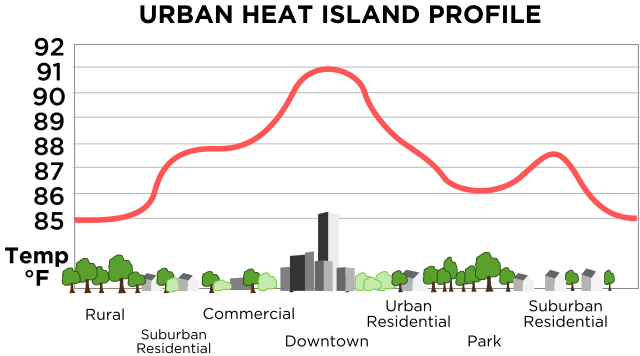
Fw: Electric cars could help cool down our cities

Via CityMetric

I like the concept of electric vehicles avoiding the production of extra heat during Summer. You can read on here. The following vicious circle tends to happen in hot cities:
  1. City gets hot (lack of tree cover, building materials that retain heat)
  2. Car engines (traffic) produce additional heat
  3. Motorists turn on AC to cool themselves, using additional car engine power, and producing additional heat around them.
  4. Go to 1.
Electric vehicles reduce 2 and partially 3. There is great potential for compounded benefit. What do you think?

Image: Wikimedia Commons

YPT Panel on Renew Atlanta Infrastructure Bond Referendum [Update: Passed 9:1]

Shot I took of the panel discussion. From left to right: Rebecca Serna (Atlanta Bicycle Coalition), Sally Hammock (PEDs), Jalal Slade (City of Atlanta), Kwanza Hall (Atlanta City Council), and Tom Weyandt (Moderator).
[Update] The bond referendum passed by a 9:1 margin. Nice to see Atlanta moving forward with infrastructure upkeep.

On March 5, 2015, YPT Atlanta (Young Professionals in Transportation) hosted a panel discussion on the upcoming Renew Atlanta Infrastructure Bond Referendum. The event was held at the Metro Atlanta Chamber. with a good turnout (25 pers). The Twitter handle is #RenewATL. Early voting is under way for the referendum, which date is March 17, 2015 (St. Patrick's Day). The municipal bond is a $250 million package to modernize a sizeable portion of Atlanta's roads, bridges, facilities, and more. If approved by Atlanta residents, the bond will be solely funded by existing city taxes over 20 years. 

Here are my summary notes from the event, paraphrased and in no particular order: 
  • Tom Weyandt, Transportation Policy Advisor for Atlanta Mayor Kasim Reed, introduces the panel.
  • Jalal Slade, City of Atlanta Senior Real Estate Advisor, describes the main highlights of the bond:
    • The bond addresses $250 million out of about $1 billion of infrastructure upgrade backlog. The amount was selected for it's balanced impact on the city's finances.
    • There will be two separate questions on the ballot:
      • a $180 million allotment for transportation (roads, bridges, sidewalks, complete streets with bike lanes, traffic signal synchronization),
      • a ~$84 million allotment for facilities (parks, fire and police stations).
    • The project list will be finalized during the weeks after referendum passage, before actual bond issuance.
    • Oversight may be similar to the management in place for Atlanta Airport.bonds.
  • Kwanza Hall, District 2 Council Member, provides additional details:
    • 2/3 of the bond amount will be for city-wide projects (~$134 million for transportation, $44 million for facilities).  
    • The remainder will be for local projects.
    • A small amount will be available to each City Council member for small fixes, and as buffer to complete or "top-off" projects that affect a particular district. Hall mentioned about the MLK Natatorium, once used for Olympic trials.
    • Maturity of the bond is 20 years, and will be repaid using existing city taxes.
    • City tax revenue is high enough to make bond an attractive option. 
  • Sally Hammock, PEDs CEO, explains a drawback of the bond project line up:
    • Only $5 million have been allocated for sidewalks, vs. the $40 million planned initially (sidewalks cost the city $15 million/year). 
    • Sidewalks tend to be seen as add-on to large projects rather than priority projects.
    • Sidewalk maintenance could be added to the city's annual budget. She references a Georgia Tech study on the state of sidewalks to quantify the current needs.
  • Rebecca Serna, Atlanta Bicycle Coalition (ABC) CEO, explains the transportation opportunities:
    • A chance to rebalance modes, especially bikes and foot traffic.
    • ABC has an objective of 15% allotment for "complete streets" in the project list. The actual fraction is about 13%, which is very close to the objective. The transformation of DeKalb Ave. using the complete streets approach will be the flagship project for bikers.
    • Improved infrastructure such as new bike lanes must connect together rather than form a patchwork.
    • The projects under this bond should be used as credit for future bonds.
  • A topic on funding expansion is brought up by the moderator and the audience:
    • Budgeting serves short-term projects better rather than 20-year projects.
    • Rebecca Serna suggests levying parking fees.
    • Kwanza Hall suggests figuring out how to attract economic development to the city and into existing buildings. He mentions incentives for students to remain after college, and the low occupancy of Bank of America Tower in Midtown Atlanta.
  • Q&A session
    • A resident mentions about Lee Street improvements, in Southwest Atlanta (near West End). There is an advocacy group for that corridor, however it is unlikely that Lee Street will be included in the bond project list.
    • A Georgia Tech student asks about transit projects. Unfortunately there are none, however transit buses will benefit from road projects.
    • A resident asks about financing after the bond matures. The answer from Kwanza Hall leaves may ideas open, most notably a 3% capex line in the city budget, property sales (Underground Atlanta, will provide capital and operational revenue). He also mentioned partnering with energy companies to promote building efficiency. It is still a "best bang for the buck" attitude.
    • The panelists are asked about the tally after votes are cast. The panelists expect a large win.

Notes from Obama's State of the Union address

Tuesday evening during prime time was President Obama's annual State of the Union address, delivered at the United States Congress. The transcript has been made available here so the public could follow. The entire video of the speech, recaps of facts and figures, including infographics, are also posted on the White House website.

(Image: White House/YouTube)
Here are some notes, more or less paraphrased, I quickly jolted from President Obama's State of the Union address on the topics of energy, and climate:
  • On energy:
    • Record low gas prices this year will save a family $750 at the pump.
    • U.S. is #1 worldwide in oil and gas.
  • On the economy:
    • Believes in "middle-class economy" where everyone gets - and pays - its fair share.
      Lowest unemployment rate in U.S. since 2008 Great Recession. 
  • On climate:
    • "No challenge poses a bigger threat to future generations than climate change." - We must act immediately and do everything we can to save our planet.
    • 2014 was the warmest year on record (see my related post here), and all but one of the 15 warmest years are in the 21st century.
    • Climate change is an "immediate risk to national security."
    • The President will "not let Congress reverse the clock" on climate measures.
    • The United States has come to an agreement with China to respond to climate change (e.g. by reducing emissions). Other countries are stepping up.
    • See the President's plan on climate change on the White House website.

Two new findings on climate change [updated]

Two articles published in the last few days reveal a new twist in the magnitude of climate change.

(Image: nasa.gov)
This New York Times article reveals that 2014 has been the hottest year on record, with a bar chart showing evolution of temperature over last century. This article from Bloomberg goes further by animating superimposed monthly averages over 100 years, highlighting record years as they pass. You will see that the past 20 years have seen more record temperatures than the 80 years before then. The original publication (and the animation shown on this page) is from NASA/NOOA. Despite polar episodes and snow storms across the U.S., the warming trend is here to stay, and extreme weather such as draughts, super hot summers, violent storms, and cherry trees blooming in January (happened in 2013 in Atlanta) may become more common place.

To make matters worse, this Climate Central article reveals that sea level has been rising faster in recent years than initially thought. The authors of the study created a model that better captures contributions to sea level rise. The article raises the question about how this model will impact forecasts of sea levels in the future... no very reassuring to begin with.

These findings should serve as final warnings to those who are still skeptical about global warming. These articles might even try to tell us we have less time than initially thought to address climate change. Will we be up to the task?


Stories on oil prices crash

(Photo: John Massie/Flickr - License)
For more than a month now, we have seen quite a few stories about the fall of oil prices. Here are a few catching headlines.And of course, you can monitor prices from my Fuel Economy page on this blog.


Fw: California breaks ground on bullet train as climate solution

Via MSN News

At last, construction is starting for the first high-speed rail project in the US. The line will link downtown San Francisco to downtown Los Angeles in three hours and reduce emissions from car and air traffic. Read on here. Also visit the official page from the California High Speed Rail Authority.

Truly Alternative Fuel Buses

I recently came across two kinds of buses that truly use alternative energy sources.

(Photo: fta.dot.gov)
The first one was tipped to me by a friend who administers transit programs. CALSTART will soon roll out the first fuel-cell, full-size transit bus in the U.S., in partnership with the Federal Transit Administration (FTA), bus manufacturer New Flyer, and several other vendors. Officials refer to this accomplishment as a 'major milestone.' Typical bus usage may exceed 500 miles a day. CALSTART promotes and commercializes clean transportation technologies.


(Photo: Wessex Water)
The second kind of buses was relayed by Engadget. This bus built in the U.K. converts the energy contained in human waste into mechanical energy, by means of 'anaerobic digestion' that produces methane. The bus can travel up to 180 miles/300 km. The bus is built by Scania and get its biomethane from a biowaste plant near Bristol. Engadget also has a video that explains how this bus works.

In conclusion, there are always sparks of innovation in the energy and transit industries. Let's see how soon we may get to enjoy them!


Fw: What It Would Really Take to Reverse Climate Change

Via IEEE Spectrum

Image: Alfred Palmer - Library of Congress
At the current technology and policy progress rate, it will too late to reverse human-made climate change. At least that is the conclusion of this very interesting article from IEEE Spectrum Magazine. Read more how the authors are taking a retrospective on an aborted Google project that aimed at delivering technology to curtail carbon emissions. They say that despite carbon cutting measures, continued use of fossil fuel will cause CO2 levels (and temperatures) to rise for the foreseeable future.

Fw: Solar Panels for converting CO2 to fuel

(Via Princeton University and Engadget)

Imagine this: converting excess CO2 responsible for global warming into something useful, such as formic acid... Formic acid is used to de-ice planes and might also be used for energy storage in fuel cells. Princeton researchers engineered a process that converts CO2 and water into formic acid, with a 2% efficiency. It's basically an improved imitation of photosynthesis!

Read more at the source links above.

Fw: Atlanta leapfrogs Seattle to become No. 2 U.S. city for electric cars

(Via LinkedIn, Atlanta Business Chronicle, and WSJ)

Atlanta has become a surprise success for electric car makers and the reasons-state subsidies and unfettered access to carpool lanes-offer a telling lesson in what it takes to lift demand for the vehicles.

It is only half surprising. At the office, we have a solar carport with 4 chargers and 8 parking spots. As of six months ago, I have a dozen colleagues sharing the carport and optimizing the time to charge their vehicles. All employees lease electric vehicles from Nissan, Chevrolet, and Ford, taking advantage of federal and state tax credits, and cheap or free electricity.

Read the original WSJ article here (subscription required).

Read the editorial from Atlanta Business Chronicle here.

French Press: Truths about Diesel Fuel, Cycling Revives Cities

From Liberation on April 7, 2014, touching on fuels, pollution, and alternatives to restore mobility and livability in cities:
(photo credit  Laurent TROUDE, liberation.fr)

April 28-May 2: Air Quality Awareness Week in Georgia!

In southern U.S., Georgia Commute Options celebrates Air Quality Week from April 28 to May 2.
Check this newsletter for details. Also, enter this Facebook contest for the best 'Me Time' story by telling your best enjoyable activity you would do if you were not spending time commuting.

(image credit gacommuteoptions.com)