Showing posts with label smart grid. Show all posts

IEEE PES Atlanta: Space Solar Power

This week at the IEEE PES Atlanta lunch event, the topic was on space solar power (SSP) . The presenter was Space Solar Power Institute President Derel Preble. Here are my notes from his presentation.


NASA started research on SSP in the 1980s. The principle is relatively simple: harvest photovoltaic (PV) energy from solar rays in the space before they get attenuated by the Earth's atmosphere, then transmit that energy to the ground using a low density microwave beam. Such beam would not be attenuated by the atmosphere. The energy from the beam would be collected using antennas rectifiers ("rectennas"). Each geo-orbit satellite could provide 1 GW of power. Northrop Grumman has committed $17 million for SSP research at Caltech to further advance the field.


There are big advantages to this concept, shown in the photo above:
  • Maximized PV energy collection,
  • Reduced transmission losses to the ground,
  • 24-hour availability without weather sensitivity,
  • Dispatchability (can modulate output anytime),
  • Reduced land use, with dual-use of land for farming.
The major drawbacks are the high financial and engineering risks:
  • Prohibitive cost to build/launch satellites (sweet spot at $150/lb with reusable rockets),
  • Challenges harvesting/capturing the energy transmitted from the satellites,
  • Maintenance of the equipment in space (by robots),
  • Effective, large scale storage (compressed air seems most cost effective).
Space solar power should be transmitted on a reserved microwave frequency, such as 5.8 GHz, to avoid interference with other equipment. Microwave ovens operate at 2.5 GHz. The Georgia Tech students in Prof. Durgin's lab presented their work on building a cost-effective rectenna to harvest 5.8 GHz microwaves using off-the-shelf products (e.g. a regular printer). They are able to use the energy from an emitter one meter away to power a diode!


Derel Preble noted important aspects of offsetting fossil fuels and carbon emissions:
  • There are no actions in place to mitigate rising CO2 levels (EPA hearing Atlanta Nov. 2015).
  • High CO2 levels decreases the nitrogen nutrients absorbed by plants, negatively affecting cattle quality in turn.
  • While high fuel prices tend to lead to recessions, the economy doesn't improve with low fuel prices after a recession as consumers struggle to recover.
  • Energy ROI (EROI) must be considered when designing renewable energy production and storage. "Buffered" EROI is half when including storage (energy buffers) because of the energy involved to build the storage technology. Derel Preble mentions that it is not worth the EROI trying to store PV and wind output.
In conclusion, I am excited to learn about space solar power because it is an opportunity to make the most of our Sun. What is still unknown is whether launching costs will be favorable, and whether the technology to harvest energy beams is feasible.

Fw: Hawaii to go all solar by 2040


Hawaii, the US state with the most energy constraints, enacts the most ambitious policy: going all solar by 2040. And perhaps they will have solar planes first too! Other states could find inspiration from Hawaii's example. 

Solar plane over Hawaii (image source: NASA)

On Tesla's new Powerwall home battery

Via Engadget

Powerwall, Tesla's new battery solution for homes has just been announced, and is bound to open a new market. Tesla Energy is the new business unit that will sell the compact 10 kWh battery for $3500. 

In my opinion, Powerwall has clearly one advantage for the following consumers:
  • Homes powered by any kind of renewable energy: the batteries can store the surplus that can be later used, without drawing extra power from the grid,
  • Homes without a renewable energy supply, but in areas prone to power outages: batteries may power basic appliances (fridges, heating) for the first few minutes of an outage.
  • Homes without a renewable energy supply, but in areas with demand response/power shortages: batteries may cover the house energy needs for the duration of the demand response event, typically during peak hours. The battery is recharged during off-peak hours. 
Tesla's Powerwall battery units addresses specific needs. Besides outage and demand response management, we expect to see the value of the batteries in conjunction with harvesting renewable energy.

Fw: How well do you know your urban future?

Via EnergyBiz Insider

This EnergyBiz newsletter hits right in the spot: the MIT City Science Lab started as a transportation research lab, and expanded to the fields of energy (you need energy storage to operate an electric vehicle), urbanism (adequate planning to reduce travel) and even connected homes (appliances that work with each other according to owner's schedule).

Of interesting note, the MIT folks stopped using the term Smart Cities for their research, the same way as a number of utility vendors stopped using the term Smart Grid. Both terms don't carry much meaning anymore because the possibilities are so vast.

At the end of the newsletter, you will find a download link to this month's issue of Intelligent Utility magazine. Enjoy reading!

Georgia Legislative Session Outcomes

2015 has some interesting highlights for transportation and energy in Georgia.
Here is a some articles discussing of new legislation that will:
Full texts of the bills above can be found below:

"Data from the Sun" (Analyzing solar imagery)

Speaker Rafal Angryk being introduced.
Last night, the Atlanta Data Science Meetup hosted a talk by Dr. Rafal Angryk on analyzing solar data (solar event imagery, to be precise). Dr. Angryk has a computer science background and recommends reading Fourth Paradigm (free from Microsoft). He conducts solar imagery research at Georgia State University's Institute for Insight, which is a multi-disciplinary center for advancing analytics. Here are my notes from this very interesting topic.

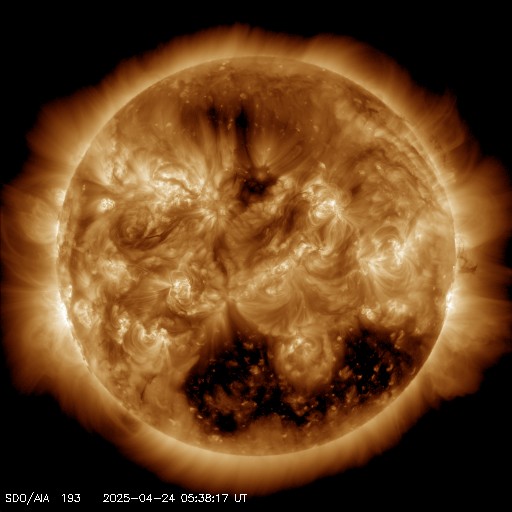
The analysis and prediction of solar storms from solar imagery is relevant for several reasons. Particles emitted by the Sun are responsible for northern and southern lights. During a solar storm, authorities have two minutes to reach, or the intensity of the particle radiation can reach levels hazardous to:
Solar surface image (source: NASA/Solar Dynamics Observatory)
Solar imagery comes from the Solar Dynamics Observatory, in both raster and vector formats. 150GB of imagery are produced every day. Dr. Angryk's group extracts parameters from these images, 6 months at a time, performs dimension reduction, then indexes the findings (k-nearest neighbors or kNN index) for comparison. Over 180,000 features have been identified over 5 years of data.

Dr. Angryk's lab created imagefarmer.org to find whether a shot of the sun is similar to similar to a database of existing photographs. This opens the possibility of comparing a computer-generated Sun image to real photos.

The keys to define features and similarities are: (i) content and (ii) time sequence. Typically, features of the Sun surface are defined by their center (location) and curvature (extent). Features are then linked in time to create a temporal "signature" of an event. Some events last 30 minutes, others last 12 days. Noise is filtered out to avoid erroneous results. The resulting dataset is thus multidimensional.

By extracting and sequencing the features of solar images, it becomes possible to predict the evolution of a solar event and inform the authorities so they can protect people and assets from solar storms. Dr. Angryk hopes he can use image analysis to foster collaboration between the teams specialized in solar observation with teams specialized in the physical modeling of the Sun's activity.

One could also imagine the technology developed in our day-to-day life. The cited example would be a completely personalized shopping experience, where shoppers presented with a choice of similar items according to their taste.

Fw: DistribuTECH 2015: What's the killer app for the smart grid? There isn't one.

Via UtilityDive

This post from UtilityDive.com sums up why there is no consensus about a "killer app" in the power distribution industry, and I agree with the statements.

From my personal experience, a few years ago, companies large and small set on discovering what was the equivalent of Facebook in the power distribution world. As you reflect on the needs that utilities want to address, the outcome boiled down to a few sets of narrow needs, such as "how to I track asset usage", "who is not paying his bills", or "where are customers suffering power outages." When the industry gets solid solutions to these questions, I think time will come to research the next big opportunities.

Fw: Three Interviews on Utility Analytics

Via greentechmedia.com


At this page, you will find videos of executives at three competing companies explaining their vision on utility analytics during the SoftGrid conference:
  • Landis+Gyr's Soorya Kuloor (former GRIDiant CTO)
  • Space Time Insight's Steve Ehrlich (VP Marketing)
  • TempoIQ's John Cronk CEO


It just happens that greentechmedia.com placed links to these videos on the same page.
Disclosure: I am now an employee of Landis+Gyr INC.


IEEE Electrification Magazine

The IEEE Electrification Magazine fits perfectly at the crossroads of electric power and transportation. It contains technical content that bridge both energy and transportation. How good does that feel to read that sitting on the train on the way home?
 
If you are an IEEE member, you might have received an email link for a complimentary copy of the September 2014 issue, which features:
  • Power-Quality Improvement in AC Railway Substations - The concept of chopper-controlled impedance.
  • A Catenary-Free Electrification for Urban Transport - An overview of the tramwave system.
  • Stray-Current Corrosion and Mitigation - A synopsis of the technical methods used in dc transit systems.
  • Riding the Rails to DC Power Efficiency - Energy efficiency in dc-electrified metropolitan railways.
  • Energy Harvesting for the Electrification of Railway Stations - Getting a charge from the regenerative braking of trains.
  • Railway Electrical Smart Grids - An introduction to next-generation railway power systems and their operation.
These topics are not that new to be honest. Metros had regenerative braking since the 1980s, and some cities have been operating streetcars without overhead catenaries. Nonetheless, the time is right to talk about these topics again as cities and countries embrace rail transport, or are about to upgrade existing equipment.  

If you are not an IEEE member, you may still read the first issue of the magazine at this location.


Physics of Sustainability Lecture

Last week, I attended a presentation by Dr. Littlewood, Director of Argonne National Laboratory, who spoke on the physics of sustainability at a Energy Leader speaker series at Georgia Tech. Dr. Littlewood drew a crowd that packed an auditorium in the recently built Marcus Nanotechnology Building at Georgia Tech. The abstract is shown on the poster below. (No special permission needed for posting slides, according to presenter)


Here are my take-away notes and thoughts:
  • All* renewable energy on Earth comes from the Sun... (*geothermal energy too?)
  • There is only as much energy per square meter in each country (because of latitude, land available, general climate, hours of sunshine available)
  • Renewable energy appears to be efficient, but... can renewables scale for each country?
  • A few examples of orders of magnitude:
    • Full scale photovoltaic (PV) to supply the entire USA (1TW at 300W/m2) would require covering an area of the size of New Mexico with solar panels (assuming 30% efficiency).
    • Like those wind turbines? Fluid dynamics limits the spacing between wind mills and restricts the usable energy density to 6W/m2.
    • Hydroelectricity from large water dams provides a 0.3W/m2 annualized.
    • IT makes up 12% of all energy usage. CPU speeds are limited by heat.
    • I have done a similar scaling exercise at Georgia Tech in the Energy Technology and Policy class, once taught by Prof. Valerie Thomas. Humans need to eat the energy equivalent of one rabbit a day to survive.
  • New energy technology should focus on small-scale point-of-use. Efficient batteries and PV. Large power plants and transmission grids as we know them should be treated as an exception. It is quite unlikely that we will come up with an energy system of such large scale.
  • Focus should also be on interfaces between energy systems. Examples include heat pump appliances (now underperforming by a factor of 100) and how to transfer energy from one environment to another.
  • Energy = money. "The cost of things is their energy input," especially when considering the "payback" time for renewable sources, which the time until the energy produced by the source exceeds the energy needed to build the source. The speaker mentioned cheap solar sources made in certain countries that require inordinate amounts of energy (or pollution).  


Slides of the presentation will be made available at some point. Meanwhile, someone at University of Michigan taped a previous recording of this speech and posted it on YouTube.

From the White House: Harnessing the Power of Data for a Clean, Secure, and Reliable Energy Future

(Via Jess C. and LinkedIn)


The Obama administration has been working on a law opening up government data for individuals and businesses to leverage. The fact sheet at the link below only reinforces the commitment of the administration to encourage the community to step up and find the value behind energy data, including grid operations, energy sources, and home/commercial energy usage.

"President Obama’s all-of-the-above energy strategy recognizes that we need to
deploy American assets, innovation, and technology in order to safely and
responsibly develop more energy here at home and be a leader in the global
energy economy. This means tapping into every ounce of America’s creativity and
ingenuity to catalyze innovations that provide consumers with choices to reduce
costs, save energy, and protect the environment.
This approach calls for all hands on deck—including
private-sector entrepreneurs, technologists, and innovators who are critical to
building the tools, services, and infrastructure needed to support a clean
energy economy. Both the public and private sectors have an important role to
play in continuing our progress to develop and deploy renewable energy sources,
strengthen the electric grid, drive more advanced and fuel-efficient vehicles,
and cut energy waste in homes and businesses."


Read more: FACT SHEET: Harnessing the Power of Data for a Clean, Secure, and Reliable Energy Future | The White House


Catch Up: CNBC Commercial Features GE's Grid IQ Insight

Last Fall, CNBC aired a documentary, Rise of the Machines, featuring GE's top "Industrial Internet" offerings. One of the commercials, "A Brilliant Grid," was about Grid IQ Insight, GE's offering on energy utility analytics. Enjoy the commercial below.