Atlanta's Mayoral Forum on Transportation


Last night was the Mayoral Forum on Transportation, led by the Atlanta Bicycle Coalition and co-hosted by a number of transportation and environmental organizations such as Sierra Club, PEDs, Advance Atlanta, or MARTA Army.

I took some tabulated notes and impressions of all the candidates for Atlanta Mayor. Most of them gave solid answers to questions by moderator journalist Rose Scott.

The questions were as follows:
  1. Introductions
  2. Is the Atlanta Streetcar a good idea?
  3. Should the city be responsible for repairing sidewalks?
  4. How to connect transportation equity and affordable housing?
  5. Do you support facilitating bike access to all?
  6. How would you influence MARTA to improve transit?
  7. How would you balance building bike projects vs. community opposition?
  8. Dealing with Uber/Lyft?
  9. What do you propose to curb greenhouse gas emissions? 
  10. Closing statements.
Here is how I perceived the candidates responded for each question. Y is yes, N is no. Answers are ranked in 3 levels, 1 is weak, 3 is strong. A response that outlines a way to address a particular issue gets high marks. A plausible vision gets lower marks, and do-nothing responses and off-topic responses get lowest score.


Candidate 2346789
Peter Aman 32222
Rohit Ammanamanchi N32233
Keisha Lance Bottoms31133
John Eaves 31112
Kwanza Hall 332312
Laban King 221312
Vincent Fort 311222
Ceasar Mitchell 323333
Mary Norwood 33333
Michael Sterling 1222
Cathy Woolard N2332
Glen Wrightson N21111

There was unanimous consent for providing access to bike infrastructure.
The question that candidates answered best was on the sidewalks. Responses were least elaborate on reducing greenhouse gas emissions. Racial issues came up on numerous issues, namely in biking environments.

In my opinion, Norwood and Mitchell spoke the strongest answers, not surprisingly from their time at City Council, with solid challengers in Woolard, Ammanamanchi, Hall, Lance-Bottoms. But that's just on transportation issues, let's see how the candidates play out in other topics.


Also, as a joke, I came up with a list of adjectives for candidates. Can you find out which match whose?

  • Dreamer
  • Five Points
  • Energized
  • Teacher
  • Regionalizer
  • Entertainer
  • Methodical
  • Basics
  • Very Cautious
  • Inquirer
  • Playboy
  • Fortune Teller

#I85BridgeCollapse: What I have seen so far

On Thursday night (March 30) just before 7pm, a segment of the I-85 bridge in Atlanta near Buckhead collapsed due to a fire. Below is a recap of what I have seen. It will take several months for the bridge to be rebuilt.

I left work late on Thursday, going home using MARTA as usual. MARTA trains were not affected by the event. I did not see the fire, but I was able to catch evacuations on camera from the train.

On Friday, March 31, I decide to buy a monthly pass, which I loaded on one of my blue Breeze Cards. I used a separate card from the silver card I normally use because I knew I would start using the pass a few days later. Friday was the last day to reload blue Breeze Cards as MARTA is phasing them out. (You cannot reload or check balance on Blue cards anymore, and blue cards will not be accepted as of July 9, 2017.)

I was able to catch on camera the emptiness of I-85 from the train on Friday morning. The sight was literally unreal, some friends referring to a 'Walking Dead' scene!

On Saturday, I traveled on Piedmont Rd near the I-85 bridge. Piedmont Rd was closed over the weekend for crews to clean the debris. Piedmont Rd is now partially reopen.

On Monday and Tuesday during the rush hour, MARTA and MARTA Army deployed volunteers to handle the influx of new passengers. MARTA reported as much as 25% increase in ridership from the loss of the bridge. Around 40 volunteers were stationed throughout MARTA stations!

On Monday afternoon, MARTA Arts Center Station was noticeably more crowded. I worked remotely on Monday to avoid storms.

What's next? Bridge reopening was announced for June 15. Meanwhile, commuters will have to do with delays, long detours, and low parking availability at MARTA stations and park-and-ride lots. Some hope that new transit users will find it worthwhile stick with it. What are your hopes?

Lookback: Transportation Camp DC and TRB Preview

A few Saturdays ago, I attended Transportation Camp DC for the first time. It was held at the George Mason University campus in Arlington, VA. (I have been to Transportation Camp South before.) The next day, I did a quick excursion in the nation's capital and previewed a few meetings that were in conjunction with the Transportation Research Board conference.

Travel to DC could have been an issue, with snow storms arriving in Atlanta on Friday, however, I was able to leave work early and switch to an earlier flight. I took WMATA Metrorail from the DCA airport and arrived at the Hyatt Place Arlington Courthouse. Evening was spent working on the MARTA Army presentation that was pre-selected for the first session at Transportation Camp.

Transportation Camp

MARTA Army Session

George Mason University was just a 20-minute walk in the cold from the hotel. I entered Founder's Hall where I picked up registration, got breakfast, and caught up with MARTA Army co-founders Simon and Bakari and other acquaintances.

Transportation is an un-conference, where topics are submitted by the audience during introductions, and sessions are arranged by late morning. We rehearsed for the session during the intro section.

Pic: selfie


We caught the attention of a few folks who were interested in starting their own "Transit Army." In the presentation of MARTA Army's initiatives, we emphasized the need for good relationships with the transit agencies, plus some software geeks who can put data and scripts together. At MARTA Army, we think this is an exciting time to get involved in transit advocacy.

Mobile Ticketing and Other Stuff

Other sessions I attended were around:

  • Defining success metrics for transit, presented by Transit Center.
  • Mobile ticketing
  • Transportation "Shark Tank"
Although I missed half of the Mobile Ticketing session, discussions were quite passionate. I think most people want to see transit mobile app reach the level of experience brought by Uber or Lyft, or by airlines. Such apps are very well designed to guide the user from booking to passes to arrival. The apps also handle payments, and there is very little setup to do.

Transit, a Canada-based company, offers a regional, multi-modal payment solution for bike sharing, etc.
Cubic, one of the conference sponsors, was in attendance, and mentioned that transit cards would be phased out in favor of more universal media such as barcodes or credit cards. Simplifying fares might help the user, however in the end, fare calculation is implemented in the backend and is completely custom to each transit agency.


Transit advocacy groups exist in NYC (40 years of operation!), 


-


#WalkBikePlaces Conference in Vancouver

Logo credit Pro Walk Pro Bike Pro Place.
A few weeks ago, I attended Pro Walk, Pro Bike, Pro Place, an urban design and active transportation conference, to present a joint panel session about MARTA Army's TimelyTrip crowdfunding phase I did with IOBY and Transit Center. This conference takes place every two years, and this year it was held in Vancouver, Canada.

It was my first time in Vancouver. I heard about its claim to be the world's greenest city, but wow is what I said once there! The scenery is just gorgeous. Weather has been quite warm and dry as well, and I met quite a few nice people.

Vancouver/Squamish - Sea to Sky Gondola

Vancouver - Sunset on English Bay

Over the weekend before the conference, I went on a tour of that included the Britannia Mining Museum, the Sea to Sky gondola, Shannon Falls, and Horseshoe Bay. Again the views were amazing. I spent evenings at the English Bay in the West End district, and sunsets on the ocean are worth their gold!

Vancouver - City view

What is the first thing you do at a conference in Vancouver? Get the Mobi bike share pass (included in registration) then get on a "mobile workshop" using one of the many bike lanes/paths! Again, the views are impressive. On that tour, local urbanists explained how the city plans to improve land use and activate the space in less-favored areas and turn them into [land use] "innovation" districts.

#WalkBikePlaces - Project management for tactical urbanism

As far as the conference was concerned, close to 800 attendees, mostly from North America, crowded over fifty sessions on topics ranging from transit, walking, and placemaking. The venue was the Sheraton Wall Center in Downtown Vancouver. I liked the keynote speeches on making cities happy with Charles Montgomery and healthy with the city's health officials. Who knew that health, happiness and urban design were linked together? One of my favorite sessions was on tactical urbanism, where the panel described how they applied modern, fast and incremental project management methodologies (Lean Startup anyone?) to achieve quick sidewalks and street improvements.

#WalkBikePlaces - MARTA Army 1-year launch
During the joint IOBY/MARTA Army/Transit Center panel session, David Weinberger presented IOBY's crowdfunding platform that I initially used. I presented the making of MARTA Army's TimelyTrip initiative. I passed around one of our laminated signs to the audience. Last but not least, Kirk Hovenkotter presented Transit Center's vision on the possibilities offered by tactical urbanism. We had passionate transit advocates in the room who stayed for questions after the session time was up. The toughest question we got is how to sustain such programs after launch. To be quite honest, we are still figuring how we'll do it at the MARTA Army. We'll have to keep the "Soldiers" interested and donations flowing.

There was another set of "mobile workshops" in the afternoon. I went on a tour explaining what "Vancouverism" is. The guide, a former city council member, explained how different Vancouver neighborhoods figured out how to design themselves around (former) trolley lines, parking, less parking, and different eras of apartment buildings (1960s to 2000s), while maintaining human-scale commercial store fronts.

In the evening, I managed to string 3 transportation modes to go from conference hotel to the evening function: bike share, trolley bus, and ferry. Best way to conclude a conference on mobility! Generally speaking, I have found Vancouver's SkyTrain, buses, and ferries to be frequent and reliable.

I was up the following morning at 4am to go to the airport, landing in Atlanta at around 10pm, filled with memories of this fun and fulfilling trip. I am looking forward to the next Pro Walk/Pro Bike/Pro Place conference in 2018 in New Orleans!


Riding MARTA's double decker bus!

MARTA trial of double-decker bus.
The highlight of my commute this morning was to be able to try out MARTA's double decker bus, fleet number 1719.
MARTA is test-driving a double-decker bus on a route rotation over a few months weeks. This morning, that bus happened to travel on my usual route 140 to work in Alpharetta:
  • North Springs Station
  • GA-400
  • Mansell Park & Ride
  • North Point Mall
  • Onwards on North Point Parkway to Windward Park & Ride

The bus is an ADL Enviro 500, leased for just a few weeks, in use in places like Toronto and Singapore (thanks to Brian C for identifying the model). The closest experience I have is in London and intercity buses in Brazil. Here are my impressions from the ride.

MARTA double-decker lower floor cabin.
  • "Trial" size: Total capacity is around 100, and everyone was seated comfortably whereas normally some people have to stand. The bus is really tall and doesn't fit under any bus bay at North Springs. We boarded near the 185 bay instead of the usual bay. MARTA placed removable destination stickers on the windshield and side window. The electronic signs were not used during this trial.
  • Very good comfort: The ride was very smooth and quiet. Engine noise was minimal. There is a nice panoramic view from the upper deck. As with Xpress coaches, this bus is well suited for long rides on the freeway. Seats are padded, and upper deck seats also recline. There are reading lights, individual vents, and stop request buttons above most seats (there is no stop cord to pull). There is a standard bike rack at the front of the bus.
  • Additional safety awareness needed: The driver made safety announcements upon departure. Namely, standing and luggage are not permitted in the stairwell or on the upper deck. Movement is not permitted on the upper deck and in the stairwell while the bus is in motion. These rules probably need to be repeated should MARTA decide to "adopt" a double-decker bus.
  • Longer dwells at stops: All doors are opened and closed by the driver. Front and rear doors take a few seconds to open and close, and the driver must wait for all passengers to clear the stairwell and the upper aisle. With the density of bus stops in Atlanta, this could increase travel time quite a bit over standard buses. Should MARTA decide to use double-decker buses, they would best fit on freeway-heavy routes, or it could be necessary to revise spacing between bus stops so that travel time does not get excessively long. 
MARTA double-decker bus upper deck.
In conclusion, this trial should be interesting to validate double-decker feasibility. It is good that MARTA tries new tech to keep things exciting, especially if there is little MARTA can do at present to improve service frequency.


Projects on the #MARTA16 referendum must make transit competitive

On the 2016 Referendum

The City of Atlanta is about to decide on projects to be executed should a MARTA 0.5% sales tax and a city 0.5% TSPLOST sales tax be approved by the residents in November 2016, for a total of up to 1% increase. It is important that the projects enable a competitive transit offering in order to attract ridership.


City officials like to speak about how transportation, and public transit in particular, is an "instrument" for "equity, mobility, and prosperity," and that the anticipated growth of Atlanta to 1 million inhabitants can be fostered if planners can get people out their cars to get around.

The list of MARTA projects calls for several new streetcar and strengthened bus service. The list of city projects includes multi-use trails, street makeovers (as "complete streets" or "neighborhood greenways"), and more, especially around existing transit centers. If specified and executed well, these projects will dramatically improve the transit landscape in Atlanta.


On the need for competitiveness

I said at a recent public hearing that it is really important that the projects make transit a competitive travel option. Let's examine two recent transit projects in Atlanta that have not been executed to the fullest potential, do not provide a competitive offer, and failed the ridership test. I have highlighted the shortcomings points in red.


Atlanta Streetcar

  • Length: 2.7 miles for entire loop.
  • Distinctive signage and branding.
  • Service: every 15 minutes 6am-10pm.
  • Average speed including stops and traffic lights: 6 mph. 30-40 minutes to ride entire loop.
  • Separate $1 fare using MARTA Breeze system. Partner transfers not accepted and not issued.
  • Shared right-of-way with automobile traffic.
  • Extended waits at traffic signals.
  • Disruptions from multiple crashes involving cars at fault.
Ridership with the Atlanta Streetcar has plummeted since the $1 fare has been introduced. Some safety incidents are not enhancing the picture, and now GDOT is threatening to shutdown the streetcar. For people to ride, the streetcar has to be much faster than walking. Increased frequency and faster travel through traffic light priority (and dedicated lanes?) is a must to bring customers back. Free transfers would further attract riders already using MARTA or other systems. 


MARTA "Q" Bus on Memorial Drive (2009-2011 - Discontinued)

  • Length: 6 miles.
  • Service: Every 10 minutes rush hour only.
  • Average speed: unknown.
  • Limited number of stops.
  • No distinctive markings, signage, or amenities (fleet or shelters).
  • Shared right-of-way with automobile traffic.
  • 2 protected intersections with green light extension and queue jumper lanes (no priority for red lights).
  • Extended waits at most traffic signals.
Except for the limited number of stops, the MARTA "Q" bus had no distinctive feature from other MARTA routes. The 2 intersections fitted with queue jumping lanes to give priority to the bus did not contribute enough to improve travel time and make the public notice, and the routes have been discontinued since.


My plea for the referendum projects


The projects must include good performance metrics in order to avoid the fiascos of the Atlanta Streetcar or the defunct MARTA Memorial Drive Q Bus.

If streetcars or bus-rapid-transit lines are built, they must provide the following in my opinion:
  • Dedicated right-of-way,
  • Reasonable spacing between stations,
  • Reasonable travel speeds between stations,
  • Minimal time wasted in mixed traffic and traffic lights,
  • Frequency so that captive ridership is confident they don't have to deal with long waits if they wanted to try the streetcars,
  • Electronic signs on platforms with real-time arrivals,
  • Signage, maps, and branding on par with the premium service offered.
  • Beautiful street redesign that encourages walking around the stations.
If strong arterial bus service is built, it must provide in my opinion:
  • Increased travel speeds compared to current service, with minimal time wasted at traffic lights,
  • Reasonable spacing between stops,
  • Shelters, benches, and pedestrian amenities at/near most stops,
  • Frequency so that captive ridership is confident they don't have to deal with long waits if they wanted to try the arterial bus service,
  • Signage, maps, and branding on par with the premium service offered.


Conclusion


If done well, the new transit projects that will come from the MARTA referendum will drastically improve the image of public transit in Atlanta. That includes setting a new standard for transit frequency, travel speeds, and signage. Officials will only have one shot at executing the projects, and it is really important that the resulting offering be competitive to attract riders who would otherwise drive.

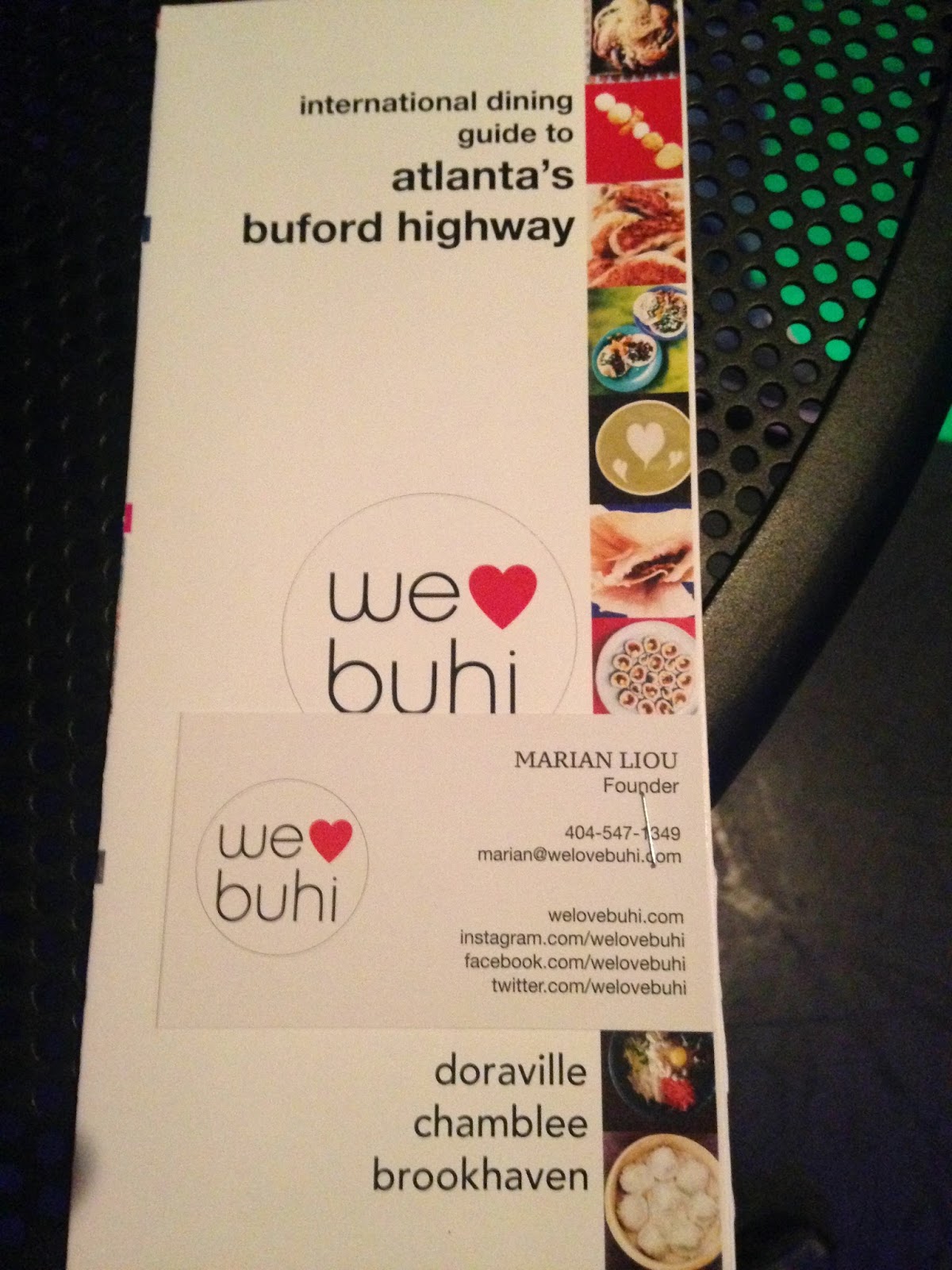
Recap of the Buford Highway Bus Crawl

Image welovebuhi.com
Last Wednesday evening, April 27, WeLoveBuHi and MARTA Army organized the first-ever Buford Highway Bus Crawl (#BuHiBusCrawl). About 120 people took the MARTA bus in Doraville, Chamblee, and Brookhaven to sample the Asian and Hispanic food that makes Buford Highway famous.

WeLoveBuHi regularly organizes events such as bike rides, marathons, etc. along Buford Highway to promote quality of life and businesses along that corridor. MARTA Army is a new grassroots organizations that reclaims your MARTA experience, and is known for the TimelyTrip adopt-a-stop program.

The Logistics

6 groups of about 20 people were scattered on multiple MARTA buses on route 39 at the end of rush hour, starting from Doraville Station and riding south. Route 39 is THE most frequent route in the entire MARTA system (every 12 minutes peak and weekends, every 15 minutes midday and at night). I used to live along that route, and I can tell you how good of a model it is for the rest of Atlanta. There were some delays, and some groups ended up riding with others. Everyone made it safely to the final destination. It is amazing to see this many hungry people waiting at MARTA bus stops!

Waiting for the bus during the Buford Highway Bus Crawl.

I was the leader for one of the groups. I think boarding and exiting buses went much better (faster) than I initially thought. Scheduling at each location was very tight because we didn't want to miss buses, so the next groups could enjoy each location and the rides comfortably.

Because of delays in bus service, my group rode with the next group for most of the event (some buses ended up too close to each other, and there was just not enough time for groups to visit a location). It was OK because the two groups were about 15 people each and could still fit on one bus. Other larger groups did not have that luxury.

All the credit goes to MARTA Army's Simon Berrebi and WeLoveBuHi founder Marian Liou for organizing this event!

The Food

The most important part of the event.
Taco bar during the Buford Highway Bus Crawl.

We stopped at the following locations, sampled excellent food, and heard from amazing speakers:
LocationFoodSpeaker
Yen Jing (near Koreatown)Chinese dumplingsVictoria Huynh (Center for Pan Asian Community Services - cpacs.org)
Doraville City Farmer's Market (Saigon Market)Vietnamese sandwiches and rolls
Guava candies
Tour with store manager.
Plaza FiestaTacos, Venezuelan empenadasAmanda Rhein (MARTA) on Developments around Brookhaven Station (TOD)
Bismallah (near Plaza Fiesta)Bangladeshi samosasSally Hammock (PEDS) on excess Buford Highway capacity
Royal Lounge (Druid Hills)Drink specialsRyan Gravel (City of Atlanta, Beltline creator) on shaping Buford Highway's future

Ryan Gravel speaking at Buford Highway Bus Crawl.
The event concluded at Royal Lounge. To access the lounge, we had to cross Buford Highway as a large group. At the lounge, keynote speaker Ryan Gravel spoke about his background as a Chamblee native, and how communities have to rethink Buford Highway's future outside of the all-highway mindset to avoid fading into the mix of other suburban neighborhoods.

And most importantly, the Buford Highway International Dining Guide was handed out. Grab it, now!
Buford Highway International Dining Guide by WeLoveBuHi.com
The interest for this event was surprising. Many people rode MARTA buses for the first time. Tickets for the event sold out - twice. During pre-event discussions, we thought novelty was a key aspect. Simon and Marian felt it was essential to showcase the true character and day-to-day challenges of Buford Highway. Looking forward to more of these in the future, maybe in other neighborhoods!

Not one or two, but THREE petitions for MARTA expansion

There is growing, strong citizen interest for the most talked-about MARTA expansion plan since the transit agency was created.

(Photo: LWV)
Last Thursday, Sen. Brandon Beach's bill flexing a 0.5% sales tax to MARTA (known as SB330) passed the GA Senate Transportation Committee 8-3. The bill still has to be voted by the full GA legislature.

Citizens must continue to push officials until the MARTA referendum is held and passed by residents. If passed, $4 billion could be raised and matched to build and operate the proposed MARTA extensions. Citizens have now at least THREE related petitions they can sign:
  1. "Support MARTA Expansion in Metro Atlanta" by Advance Atlanta. On the concepts outlined in the proposed map and the general legislative process.
  2. "Support The Red Line to North Fulton – It’s About Time" by M. Hadden. Focused on Roswell and North Fulton areas and the general legislative process.
  3. "Put MARTA rail expansion in north Fulton County on the November 2016 ballot" by B. Smith. This one is geared to county commissioners, who are responsible for holding the MARTA referendum if SB330 passes the GA legislature.
  4. John's Creek wants MARTA - Facebook page that provides the facts and benefits of the proposed expansion in John's Creek.
Start by picking your petition! Then you can contact the individuals and organizations behind the petitions and learn how you can help make the MARTA expansion happen. 

IEEE PES Atlanta: Space Solar Power

This week at the IEEE PES Atlanta lunch event, the topic was on space solar power (SSP) . The presenter was Space Solar Power Institute President Derel Preble. Here are my notes from his presentation.


NASA started research on SSP in the 1980s. The principle is relatively simple: harvest photovoltaic (PV) energy from solar rays in the space before they get attenuated by the Earth's atmosphere, then transmit that energy to the ground using a low density microwave beam. Such beam would not be attenuated by the atmosphere. The energy from the beam would be collected using antennas rectifiers ("rectennas"). Each geo-orbit satellite could provide 1 GW of power. Northrop Grumman has committed $17 million for SSP research at Caltech to further advance the field.


There are big advantages to this concept, shown in the photo above:
  • Maximized PV energy collection,
  • Reduced transmission losses to the ground,
  • 24-hour availability without weather sensitivity,
  • Dispatchability (can modulate output anytime),
  • Reduced land use, with dual-use of land for farming.
The major drawbacks are the high financial and engineering risks:
  • Prohibitive cost to build/launch satellites (sweet spot at $150/lb with reusable rockets),
  • Challenges harvesting/capturing the energy transmitted from the satellites,
  • Maintenance of the equipment in space (by robots),
  • Effective, large scale storage (compressed air seems most cost effective).
Space solar power should be transmitted on a reserved microwave frequency, such as 5.8 GHz, to avoid interference with other equipment. Microwave ovens operate at 2.5 GHz. The Georgia Tech students in Prof. Durgin's lab presented their work on building a cost-effective rectenna to harvest 5.8 GHz microwaves using off-the-shelf products (e.g. a regular printer). They are able to use the energy from an emitter one meter away to power a diode!


Derel Preble noted important aspects of offsetting fossil fuels and carbon emissions:
  • There are no actions in place to mitigate rising CO2 levels (EPA hearing Atlanta Nov. 2015).
  • High CO2 levels decreases the nitrogen nutrients absorbed by plants, negatively affecting cattle quality in turn.
  • While high fuel prices tend to lead to recessions, the economy doesn't improve with low fuel prices after a recession as consumers struggle to recover.
  • Energy ROI (EROI) must be considered when designing renewable energy production and storage. "Buffered" EROI is half when including storage (energy buffers) because of the energy involved to build the storage technology. Derel Preble mentions that it is not worth the EROI trying to store PV and wind output.
In conclusion, I am excited to learn about space solar power because it is an opportunity to make the most of our Sun. What is still unknown is whether launching costs will be favorable, and whether the technology to harvest energy beams is feasible.

Retrospective: Delta Gold Medallion Status


As you might know, I had Gold Medallion status with Delta for the last two years, and that was a lot of fun. Before that, I was Silver Medallion for a year. I will hold no status for 2016 until I requalify. You need to fly 25,000 miles a year for Silver, 50,000 miles for Gold, and meet minimum spend. Here is a quick recap of what I got to enjoy.
  • Extra baggage allowance.
  • Sky Priority for you and your luggage on all SkyTeam airlines worldwide.
  • Random TSA PreCheck access once in a while. (UPDATE: happens even without elite status)
  • Additional bonus miles per trip.
  • Premium phone line for customer service with amazing reps.
  • You get called by name when interacting with agents.
  • Free same-day confirmed or standby, with priority.
  • Drink tickets and luggage tags. (UPDATE: Gold Medallions don't get luggage tags anymore)
  • Free access to preferred seats (exit row on the A330!) and Delta Comfort+ seats when available.
  • Complimentary upgrades to First Class and medium-haul Business Class on Delta
    • 40% of the time on short and medium haul flights.
    • 1 involuntary upgrade to Premium Economy on a partner airline.
  • Free lounge access on international itineraries
    • Delta Sky Club: 6x
    • Salons Air France: 7x
    • KLM Crown Lounge: 3x
    • And a few more!

There are only 2 perks that I have not used:
  • Guaranteed reservations on long-haul, oversold international flights. This one is scary, you need to buy a full-fare ticket 24 hours in advance for that.
  • Medallion parking lot at Turner Field (the Braves Stadium). Better access the ball park by transit!

Overall, status comes with some nice tokens of appreciation, especially when you travel often. The biggest perks are lounge access and Sky Priority access, especially with international travel, which makes 2/3 of my trips. I will miss these perks, but hey why bother if I don't spend too much time in the air anymore?

Twitter good for short posts

I have been experimenting with Twitter recently. My handle is @bdenergytransit. You may see my tweets and retweets on the right sidebar of this page.

Going forward, most of the content will come from Twitter because of how easy it is to post and tag using mobile devices. I tried with the Blogger app, but there are too many shortcomings that are not worth fighting. Plus, Twitter makes it very easy to find and to follow and grab content from others you don't necessarily know.

At times I think I still need to elaborate, and the longer posts will continue to appear on this blog. So far so good, I don't have to spend too much time publishing AND formatting the posts. Let's see how that goes in the future.

Three (Updated: Four) things the Atlanta Streetcar needs to get right


The Atlanta Streetcar just celebrated its first year in operation with the introduction of a $1 paid fare requirement ("A buck is fare"). Here are a few things I think officials need to get right for the Atlanta Streetcar to bring a competitive value proposition:
  • Service frequency
    Currently, the streetcar runs every 15 mins, with two trains in service out of a fleet of four.
    • For a downtown line this short, daytime headways should be 10 mins or less to match MARTA's peak rail service.
  • Fare integration and transfer policy
    Having to pay separate fares when transferring between MARTA and the streetcar makes the streetcar unattractive money-wise for those who would use the streetcar as a last-mile connection. Here is a suggestion and an opportunity to integrate all regional fares:
    • $1 fare
      • A one-way single-ride ticket on the streetcar, no transfers.
    • $2.50 cash fare (Regional One-Way):
      • A single-ride ticket on the streetcar, and
      • A transfer to MARTA rail/buses or CCT/GCT local routes.
    • $5.00 cash fare (Express One-Way)
      • A single-ride ticket on the streetcar, and
      • A transfer to MARTA rail/buses and any GRTA, CCT, GCT bus (express/local).
    • MARTA fare products accepted. Customers holding MARTA passes (and maybe later regional passes) would receive, upon validation:
      • A single-ride ticket on the streetcar, and
      • A transfer to MARTA rail/buses.
        In addition, customers transferring from MARTA would receive a single-ride ticket at no additional cost. 
    • Of course, this suggestion requires loading transfers on the customer's Breeze Card at the time of validation, and using the financial clearinghouse to distribute fare revenue.
  • Traffic signal priority
    The streetcar will often get stuck at traffic lights with long red cycles, drastically slowing travel and service frequency on the already short downtown loop. Sadly, travel speeds are currently so low that walking is only marginally slower than taking the streetcar. Removing wait times at traffic lights would go a long way in improving service speeds and frequency.
    • Officials should implement traffic signal priority at all streetcar intersections, with appropriate timing of green and red lights upon train approach (extension or shortening depending on location, accommodating for stops).
  • Schedules and real-time information
    Only "hours of operation" for the line are shown. To remove ambiguity in determining if service has ended, especially towards to close of service, here is what needs to happen:
    • The times of the first and last trains for each stop/destination should be posted.
    • Real-time and other arrival information should be displayed, and data published for OneBusAway to use. Displays may need new electronic signs or using vending machine screens already available at each stop.
In most of my trips to the MLK district, the $1 fare without transfers is not attractive enough to justify paying for it. I would get there faster taking MARTA to King Memorial station and walk a few blocks, rather than waiting at Peachtree Center. On the way back at night, it is already faster for me to time bus 99 rather than waiting for a streetcar and then for another MARTA train.
 
In conclusion, the threefour major gaps in the Atlanta Streetcar operation are around the frequency, transfer policy, travel times, and schedules/real-time signage. Addressing any of these gaps would make the streetcar way more appealing than it is now.

State of MARTA Breakfast Recap

On Thursday I went to the third annual State of MARTA breakfast. Sold out, full house, with invited members of the press and local organizations. I'm summarizing a few highlights in this post, and below I'm including the #MARTAredefined Twitter feed for the event.


For the highlights:
  • The new imperatives for MARTA are S.E.A.T.: Service, Economy, Arts, Technology.  
  • MARTA board chairman Robbie Ashe quoted to say "we can't efficiency ourselves to expansion." Moves to push referendum in City of Atlanta, Fulton, DeKalb to build the rail line extensions to Alpharetta, Stonecrest, and the Emory/Clifton line.
  • MARTA employees were recognized, as well as retired couple who helped a student fix his tie on MARTA.
  • Guest speaker and Stanford professor Tony Seba explains the disruptive nature of energy technology on transportation (price point, efficiency, electric vehicles) and that car ownership in cities will decrease over time. New technologies will enable on-demand transportation.
  • MARTA CEO Keith Parker announces a MARTA Arts task force, systemwide WiFi for 2018, and hints at a fleet of MARTA autonomous cars that could take you from a transit stop to your final destination.  He speaks of moving from "Happy MARTA" to "Transformed MARTA" to "Super MARTA."
  • MARTA Army announces new program for crowdfunding of transit amenities, where communities around select bus stops will be able to pool money towards purchase and maintenance of benches and shelters.
Topics that could have been more developed:
  • CEO Parker mentioned about the comprehensive operations analysis and a resulting service overhaul, but still no word yet on what the outcomes are going to be.
  • Parker mentioned about the gap between rail and bus customers. I would have liked to hear more about streamlining connections between the two modes.
In conclusion, it was a well attended event with recaps of the initiatives taken to date and directions for future improvements that we can't wait to happen. Good job MARTA!

Fw: Getting over Uber

Via medium.com and Slashdot

Requesting car service - Photo Andrew Caballero-Reynolds/AFP/Getty Images via Mark Warner/Flickr


Here is an interesting view of why Uber, the ever popular rideshare service, may not live up to its potential to improve public transportation in urban areas. The writer makes a case of rules that apply to taxi companies (for the good of the public?) but not Uber. A critique said the competition that Uber provides helped improve transportation options. Let's see how Uber, its competitors (Lyft, ...) and taxi service respond to each other in the next few years.


Operation TimelyTrip in the making - Part 1: Mininum Viable Product


As the creator of MARTA Army's Operation TimelyTrip, I wanted to pause a moment and write about how Operation TimelyTrip went from the proof-of-concept stage last year to full launch. This post focuses on the short proof-of-concept (the minimum viable product) stage. Operation TimelyTrip is MARTA Army's first initiative, with volunteers ("soldiers") adopting 50 bus stops on the first day at Transportation Camp, and more stops being adopted and outfitted with printed schedules as MARTA Army visits different communities in Atlanta.

Because it is independent of MARTA, MARTA Army can execute experiments and fast pivot/persevere cycles that otherwise would be very difficult to implement. TimelyTrip is the poster example of a fast-cycle experiment that will lead to recommendations on how MARTA and the Atlanta region can successfully implement a system-wide bus signage program. 

MARTA Army Operation TimelyTrip signs.


Minimum Viable Product (MVP)

A minimum viable product (MVP), sometimes called proof-of-concept, is the cheapest thing I needed to show to prospective clients/sponsors that embodies the concept you are trying to promote. You should be able to do live demonstrations with it.

For TimelyTrip, the concept is to draw people to take the bus. So, the minimum viable product was a sheet of paper with printed schedules inserted into a job ticket holder that as already attached at one bus stop in Midtown Atlanta. 

TimelyTrip proof-of-concept

If you compare the minimum viable product and the "finished" product, they don't look anywhere close. The minimum viable product does not include names, logos, colors, and only includes core features:
  • A simple call to action: "Take the bus to X and Y..."
  • Routes serving the stop.
  • Combined schedule by service days for that particular stop (two routes on identical routing from the stop).
  • A QR code that points to the old OneBusAway site, and some text telling people that it was something they could scan and what they would get from it.
  • Disclaimers.
Behind the scenes:
  • I pulled the times for that stop from the database that MARTA publishes in GTFS format (the same data that goes on Google Maps), so yes there is quite a bit of tech involved even for a minimum viable product.
  • I pasted the times into a spreadsheet for basic formatting.
  • I pasted the old OneBusAway URL into a QR code generator and captured the picture.
  • I printed the sign on letter paper and black and white.
Note that bus stops with printed schedules already exist in Atlanta, however there is a gap with the information provided and the information needed:
  • In Cobb County, most CCT bus stops signs show route numbers and have a smaller sign with printed schedules.
  • Only MARTA shelters and a few other stops provide printed schedules.
  • MARTA CCT printed schedules at bus stops only provides departure times at time points, not the times for a specific stops.
  • Neither CCT or MARTA provides access to real-time arrivals for people waiting at a particular bus stop. To access real-time arrivals, riders must go to a website or navigate an app on their smartphone. 


First Milestones

In the innovation accounting principle from Eric Ries's Lean Startup, the performance of minimum viable products should be measured, and a decision of whether to persevere or to pivot is to be made.

The first thing I wanted to know was how long the makeshift sign was going to last under early Fall weather. I was surprised the sign lasted three weeks before the job ticket holder was removed. (I don't know who removed it).
Conclusion: Persevere. Bus signage can probably last a few weeks in the Atlanta wild environment.

Surprisingly, there were not many scans from the QR code. The QR code was scanned less than 10 times during the three-week period, mostly for trial purposes.  It would be necessary to create more signs and point out to users to the QR code that they can use with their smartphone.
Conclusion: Persevere. QR codes are not difficult to add to a sign, we can keep them for now.

Of course, I had to reach out to MARTA to get their feedback. The entire TimelyTrip experiment would not have gone this far if MARTA's response was not encouraging from the get go.
Conclusion: Persevere. 

Conclusion of Part 1

The TimelyTrip concept looked like it could last if there was a good way to get signs at some of these bus stops. I had a minimum viable product that embodies the concept I wanted to draw new and potential rides to the bus. Now the next challenge was to get some traction, and that will be the topic for Part 2. Stay tuned!
 

MARTA Army launched this past weekend with bus stop program


 MARTA Army launched this past weekend at Transportation Camp South. MARTA Army is an independent grassroots organization that aims at making MARTA better through hands-on, small-scale volunteer-led initiatives (also referred to as "tactical urbanism"). I am involved with MARTA Army, in particular setting up their first initiative named "Operation TimelyTrip", allowing volunteers to adopt and attach printed schedules to MARTA bus stops to bus stops. (More on the TimelyTrip story in the next few days.)

At Transportation Camp, MARTA Army recruited about 50 volunteers who adopted bus stops around Atlanta, and MARTA Army printed signs for each of the adopted stops. About 20 more signed up to the mailing list during Atlanta Streets Alive this past Sunday.  The printed schedules that will be attached to these stops look as follows:

MARTA Army Signs for Operation TimelyTrip.

This past weekend is seen as quite successful and validated the necessity of knowing bus schedules, for way MARTA buses are set up. Many uncertainties became answers, and there are new things that MARTA Army leadership including myself will have to measure.

The communities that MARTA Army contacted were all really excited about Operation TimelyTrip, and MARTA Army will be there to recruit volunteers and print schedules. The next community events are with East Point and Latin American Association, both in the Atlanta close suburbs. Stay tuned for more info, or follow MARTA Army directly on social media: facebook.com/martaarmy, or #martaarmy on Twitter!


Traveling on Delta's Medium-Haul International Business Class

Introduction

I don't normally discuss travel on this blog, but I wanted to review Delta's lesser-known Business Class product, available on it's medium-haul international routes. I had the chance to fly on it recently after receiving medallion upgrade at the gate. Business Class is not as glorious as Delta One's flat beds, and it has noticeable differences with domestic First Class.

Comparison


FeatureBusiness ClassDelta OneFirst Class
Seat features
Seat typeArmchairFlat BedArmchair
Pillows, blanketsWestin Heavenly BeddingWestin Heavenly BeddingStandard
Amenity kitTumi Tumi No
HeadphonesEarbuds (Billboard)Noise-cancelling headphonesEarbuds (Billboard)
Markets and perks
MarketsUS to Central America/ Northern South AmericaLong-haul international and JFK-LAX/SFOUS/Canada
Lounge accessYesYesNo (w/ exceptions)
Elite UpgradesYesNoYes
Food/service onboard
Menus distributedYesYesNo
Pre-departure snackChampagne/mimosa
Bag of almonds
Champagne/mimosa
Bag of almonds
Beverage
Meal qualityChef-curatedChef-curatedSnack basket or standard meal
Pre-arrival snackNoYesNo

Pictures!

Westin Heavenly Bedding and Tumi amenity kit on Delta medium-haul Business Class.

Menus distributed (in English and Spanish).

Pre-departure snacks/beverages.

Chef-curated main course on Business Class (uhh... plate was a little bit overheated?)

Conclusion

The main difference between Delta Business Class and Delta One is the seat. Business Class flights are typically shorter, and get the standard armchair, not the flat bed. Also, medallion complimentary upgrades and regional upgrade certificates can be used on Business Class, but not Delta One.

Lookback: Mark Ruffalo campaigns for 100% renewables in the Daily Show

In a recent appearance in the Daily Show (just before Jon Stewart left), Mark Ruffalo comes to discuss his film "Infinitely Polar Bear" then brings up his campaign for 100% renewable energy in the U.S. by 2050. The details of his campaign are at thesolutionsproject.org.

A quite ambitious plan that will have many hurdles to clear. You can watch the Daily Show interview below (June 11, 2015).

Fw: Public Transit Should Be Uber’s New Best Friend

Via FiveThirtyEight.com

Uber has become a common household name. As dealt in the article's topic, travel and cost of travel can be optimized by combining Uber and transit options. The article uses New York City as an example, and compares the use of Uber, taxis, and public transit availability versus household income. The cost break even decision? Buying a car, or, where available, use public transit complemented with Uber for 15-30% of trips.

What the article doesn't fully address is the alternatives to Uber, such as cycling, carpools, or even using car rental services such as ZipCar that are available in cities other than New York.

2015 Earth Overshoot Day on August 14

Earth Overshoot Day was August 14. Earth Overshoot Day is an indicator from the Global Footprint Network that indicates, for each year, what day of the year humanity has consumed what Earth is capable of producing in one year.

In other words:
  • We have just consumed one year worth's of production in less than eight months.
  • We would need 1.6 earths to sustain our lifestyles.
  • We are causing unsustainable damage to our environment (excess greenhouse gases, waste, and erosion that can no longer be naturally absorbed by the planet.)
  • If Earth was a bank account, it would be in the red for the rest of the year.
  • In some instances, people refer to excess consumption as 'ecological debt'.
Of course, each country has a unique resource allotment and consumption pattern that is averaged out in the Earth Overshoot Day indicator.

Excessive consumption may lead to shortage of resources such as fertile land, drinking water, that can lead to geopolitical conflicts. As a result, Earth Overshoot Day raises similar flags as the Countdown to Midnight clock. What do you think?